Featured

Unit 3 – Performance reviews


   First song – Need your love so Bad cover.

      By my blues band.


https://www.youtube.com/watch?v=yS5PT838nUQ&feature=youtu.be


I am in the 1st person and writing from my ( the reviewer’s) perspective…..

Bold = Names, instruments or important information.

Bold and Italic = Musical techniques, elements and devices.


Lewis, Joey, Jack and I played at the Exeter college television studio to perform a song from the blues genre. The Song was ‘Need your love so bad’ originally recorded by Peter Greens Fleet wood Mac. The song was released as in 1968 as a single and then re released in 1999 on the album ‘Shrine 69’ and it reached number 31 in the charts at the time. Fleetwood Mac covered this song themselves. It was originally by Little Willie John and released in 1955. Before hitting number 5 in the RnB charts in 1956. The song contains Guitars, bass, drums, vocals, strings and keyboard. There has been lots of members of Fleetwood Mac over many years as people have joined left and\or died but a few many band members include… Peter green (guitarist, vocalist and band founder), Mick Fleetwood (drums) Danny Kirwan (guitar) John McVie (bass guitar)… etc

The Vocalist Izzy sadly could not attend the performance, so I (the bands’ secondary singer) took over for the performance. Jack created a beat for the Band to play to, so he took the role as the drummer. Lewis and Joey were both playing electric guitars. I also played the keyboard for the piece. These are usually the kind of instruments are you’d find in the blues genre.

The guitarists worked very well with their dynamics of the piece. Really listening to the keyboard and playing fills and lick in-between the vocals. They were also careful not to play over each other. The song used many various guitar techniques including, slides, hammer ons, pull offs, bends and vibrato. These techniques are common in many genres but are infamous in the blues. They carry are treble, twangy element which added to the piece. There were a couple other melodic devices used in the song such as a call and response technique, where theoretically; the vocalist would ask a question (or sing a line) then the guitar would complete it by landing on certain notes in the scale, usually the root note. We also used imitation where the the same tune sung by the vocalist was repeated gently on the guitar. Everything about the sung was subtle and well thought out.

The song is in the key of D Major…  these were the chords we played….

A,     A7,     D,     Edim,   F*m,   Bm,   E,    E7,

The song had quite a slow tempo, in Adagietto, which was similar to the original recording. playing with a shuffle Rhythm. Our Rhythm didn’t change throughout the song, mostly because we didn’t have a drummer, but the originals’ rhythm only changed slightly in the bridge and we cut that out anyway. This is used a lot in the blues genre. But the band and I did slow down the BPM for rehearsals which just simply stuck to for the recording. we performed the song at 72 beats per minute. The song was meant to relax the audience and allow them to listen calmly to the soft playing. The structure of the song was fairly strange in comparison to the average song. There wasn’t really a proper chorus. The famous hook ‘Need your love so bad’ sits at the end of each verse and was like the chorus all be it short. There were three verses played by the band. Interestingly we chose to cut out the bridge section of the original song. This was because the songs actual duration would simply be too long. We played for 4 minutes all in all.

The songs lyrical content was quite sad. If the vocalist had been present I’m sure the song would have conveyed more emotion as she would have the ability as a singer to do this. I did an okay job at this. The words are not depressing but they have a pleading feel to them. Longing. It’s about a man who is clearly being deprived of love and wants the love to return to him. Incidentally this is typical of the blues genre. Longing for a different life, or a for life to change for them comes up a lot.

Conclusion:

I like the songs the lyrics are quite well thought out and the guitar solo at the beginning is very smooth and clean. I think that our version was better in a couple of ways. one of which was the guitar playing throughout the song. It was full of bends, slides and bluesy fills. This is absent in the original so there seems to be less going on making the song slightly duller than our version. Also the contrast of 2 separate guitars on different sounds worked very well. Peter greens version was better with the timing. ours went a bit out here and there, mostly my fault as I was making the rhythm. All in all it went well for our fist TV performance under pressure and the video made was of high quality.


Second song – Misled

by my blues band.


What we did…

Lewis, Jack, Charlie and I performed Misled by Kool and the gang on the 13/12/18 at our Level 2 gig at the CMP. This will be a review of important musical elements of the song, plus a general idea of what happened and how the concert went…

Song background…

Misled was released on the Kool and the gang album ‘Emergency’ on November 2nd in  1984. The song was said to have taken inspiration from both rock and pop music. This is evident in the song with the disco pop feel but also the distorted power chords used in many rock songs. I couldn’t find any information about whether or not the song relates to something such as a point in time. Some of the members of Kool and the gang were… James ‘JT’ Taylor (lead singer), Robert Bell (bass guitar), Ronald Bell (saxophone), Claydes Charles Smith (lead guitar), George Brown (drums), Robert Spike Mickens (trumpet) Etc…

Lyrical Content…

The song is Obviously a Love song but about being so besotted and in love with this person that you may become misled in any direction that’s not your choice. The lyrics say … My heart? My soul? My Love? Is that the Goal? They also say that he is like a ‘puppet on strings’. The song is obviously about her controlling him and getting him to do whatever she wants him to do, but he is so enticed that he can’t do anything to stop it happening.

Structure…

The song follows a really great structure which is similar to other songs but done so well and it sounds pretty unique. What is unique is that each Pre-Chorus has different lyrics to each one and the song has multiple alternate Choruses. Here is what the basic structure of the song sounds like…

Intro,     Verse 1,     Pre-Chorus,     Verse 2,     Pre-Chorus,     Chorus,     Verse 3,          Pre-Chorus,     Chorus,    Bridge,    Alternative Chorus x2,     Chorus,    Outro.  

Instrumentation…

We played this song with some of the same musical instruments as the original song but not all the same. One thing to note is that Kool and the Gang had 10+ members in the band whereas we performed the song with only 4. We found a steady balance between keeping true to the original and taking the song in our own direction. I was on Keyboard/piano for the song which can be heard in the original track but for the most part is absent from the piece. Lewis played electric guitar which can definitely be heard in the original. Jack Created a really funky beat which everyone seemed to love that Lewis and I played over. Charlie did a great job at stepping in to be our vocalist as our band singer was not at the gig.

Playing Techniques…

Lewis was Playing mostly power bar chords for Chorus and Pre-Choruses of the song (the verses and bridge had no guitar parts) except from the intro which consisted of a blues lick with a large bend and vibrato technique. This was achieved with conviction on stage thanks to Lewis. The lick was fairly easy to play but easy to get wrong with just a single note out spoiling the sound. Jack doesn’t really come into this section as he wasn’t actually performing live. I played a very jazzy and unique style for this song which is not part of the original version. which I will talk about more in depth when it comes to melody.   

Tempo…

The BPM (beats per minute) of Misled is 122. This would place the song in the Allegro-Moderato tempo. This is slightly slower than Allegro but is described as moderately fast. (Allegro is classified as fast, quick and bright). This makes the song fun which is common to disco music in particular.

Melody…

The melody, apart from Lewis’s guitar solo intro was played entirely on the piano and vocals. I played sustained and arpeggiated chords during the verses using a call and response technique. Charlie would sing a line and I would hold the chord, then when he stopped to take a breath I would play the notes of the chord in an arpeggiated pattern, with different inventive variations each time. With the call and response technique this enabled a resolving feel to each line and helped me to not play over the vocals. This was not the case in the Chorus as I was playing straight quavers in this section. This was to brighten up the Chorus as this is supposed to be the loudest and most memorable part of the song so required build up. I also used  melodic sequence a few times in the piece during the verses. I would play a responsive lick to the vocals then play them again one octave higher, then descend down the Eb scale to where I started from.


Rhythm…

As we had no drummer the beat of the song didn’t really change throughout. But the rhythm Jack created was an electronic sounding Shuffle beat with lots of hi-hats and a busy drum track. Lewis didn’t strum chords in any of the song so was not providing rhythm but melody, I on the other hand was playing straight quavers for lots of the chorus. Staying in sync with the drum beat that was the entire rhythm of the song.

Conclusion…

Personally I think the song went well and I really enjoyed playing it. I thought the introduction of Piano/keyboard brought a new sound and element to the mix making the song seem more filled and interesting. I also think the song could of been made better if there was more people in the band as this song has a ‘more the merrier’ feel with lots of little sounds here and there but nothing overwhelming. I do prefer the original song by Kool and the gang purely because of both the fast well sung lyrics that the original is full of, the extreme high notes the lead vocalist could reach and the funky riffs they included with brass instruments and organs. I do however love both versions as they contain a great style of Soul/disco and dance and I think my whole band played very well especially considering we were missing a vocalist and the song was completely new to all of us when we received it.


Hope you liked these reviews…

Ben McKenzie                                                                                                                             15/12/18
Unit 3 – Recording project.

The song we are going to be recording for the unit 3 project is

Hound dog by Big Mama Thornton.

https://www.youtube.com/watch?v=frsBq9MCNVg

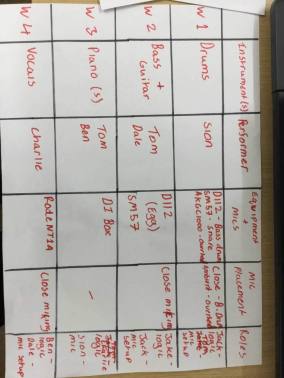
This is a Photo of the plan of action we have for our recording…

college-unit-3-recording-project-poster1

Here is a list of the important equipment we will be using for the recording project:

Microphones:

 We will be using 4 different kinds of microphones for the project, each for a specific type of recording. They are the D112, SM57, Rhode NT1A and the AKGC1000. It is important to use the correct microphone when recording music for 2 different reasons… Some microphone have difficulty picking up lower frequency sounds such as the SM57, So the recording will be to quiet. Also different microphones have different levels of clarity. The Vocalist should have the clearest microphone for their vocals. The placement of the microphones is also very important to the sound recorded. Close miking is used for a crisp louder sound. This is achieved by locating one of the speakers inside the amplifiers and placing the microphone as close as possible to the very center. For ambient miking, the microphone should be placed not central but towards the side of the speaker. This is for a different effect. it’s less sharp and loud (more for backing instruments).

These are the microphones specific jobs.

We will be recording the vocals on the Rhode NT1A.

The Bass guitar and Bass drum with the D112.

The overhead drums and symbols with the AKGC1000.

The Keyboards straight into the DI box.

and the Guitars and snare drum with the SM57. 


other equipment used…

XLR Cables, To connect the DI box to the wall board and the wallboard to the mixing desk.

Guitar Audio cables, To connect the instruments to the the amplifiers.

Patch bay, It allows the inputs to be arranged in different combinations.

DI box (direct injection) To covert unbalanced or high signals into a specific format that’s is able to be plugged directly into mixing desks or patch bays without the need for microphones.

instruments, For the musicians to play, the source of the sounds.

Mixer, As in the name, to adjust and mix the sound. add effects such as: Panning, reverb, gain, distortion etc. most importantly to adjust the levels of volume recorded.

Wall board, To connect the Di box and microphones to in the live recording room.

Logic (on a computer), This is the programme used to record and save the music onto.  

the role of musician, producer and engineer?


Who is the musicians and performers for this project?

Sion – Drums

Tom – Bass guitar and piano solo

Ben – Piano and guitar

Dale – Guitar

Charlie – Vocal

Week 1 recording project:

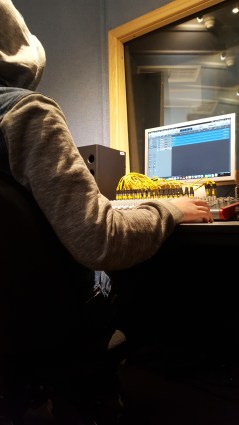
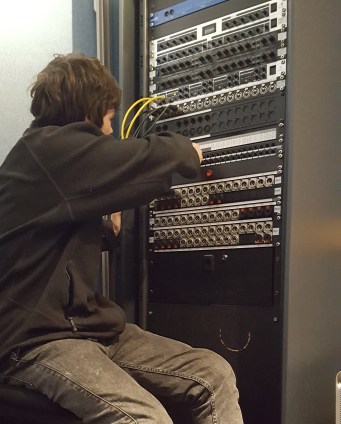
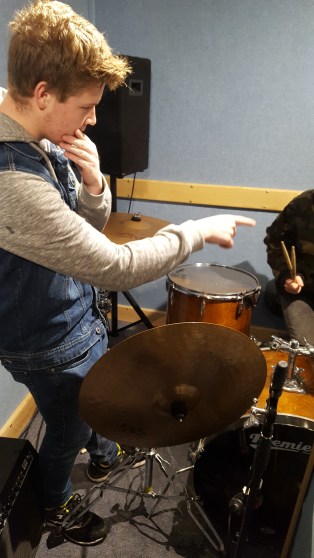
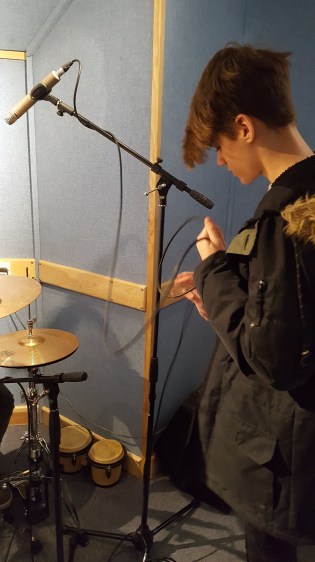
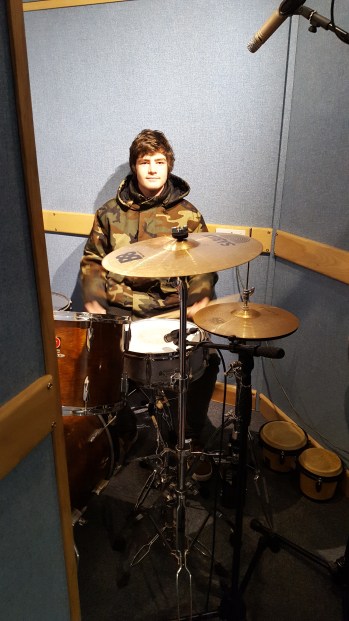
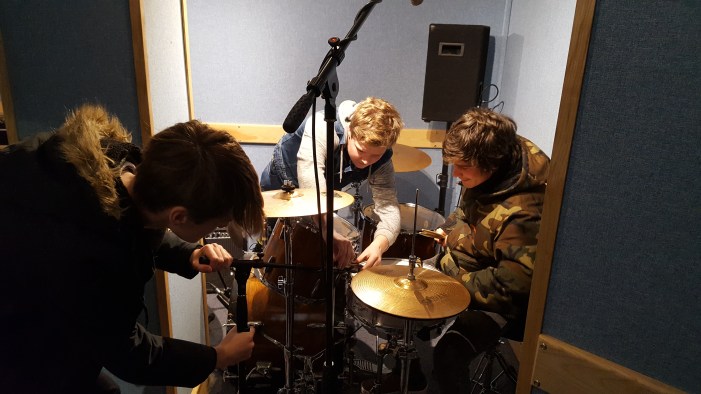
We Recorded Sion’s drum track today. Jacob, Dale and I set up the microphones and adjusted them to the correct placements. Ben pointed out that the mics’ were not at the correct position to pick up the optimum sound, this was quickly rectified by tilting the mics’ down over the drum set. We positioned the D112 right in the Center of the Bass drum. The Sm57 capturing the snare and 2 AKG C1000s’ for the over head mics. Once everything was all plugged in and switched on, the team gathered in the recording room and Sion at the drums. Sion playthings the song really well at a 133 bpm. There was some difficulty initially on getting the click track right for the drummer. Plus Logic was playing up on the computer. After around 5 minutes we figured it out and went on to record a couple takes of drumming. We also managed to get the bass guitar finished and on the track thanks to Tom. So far the song is going very well with two instruments sorted. Next week we plan to add guitars and if there is time electric piano.

These are some pictures from our first Week – 

20181127_100448.jpg20181127_100517.jpg20181127_092532.jpg


20181127_092334.jpg20181127_092311.jpg20181127_092304.jpg20181127_092254.jpg20181127_092322-2.jpg


Week 2:

Today we managed to record the guitar parts of Hound dog, Dale was the guitarist playing. We positioned the Shure SM57 right in the center of the guitar amp. This picked up a clean crisp recording of the guitar. Dale was playing a rhythm sequence which involved the notes of the piece in A major. after a few minutes of making sure he could stay in time with the backing track we recording the piece. We took 3 takes until we were satisfied with the timing and sound. Sion and Jake were on at the computers and were recording the sound onto logic. Dale wore headphones so we could communicate with him from the recording room. he spoke into his guitar microphone when he wanted o speak to us from the live room. The recording went quite well, I think if we had more time we could have found something a little more inventive for the guitar to be doing but as we were limited on time we made do with the recording we had already done.

IMG_0459.JPG

What is the signal path?

In basic terms the signal path is the process of getting a sound waves in the air into a to digital sound on a computer. There are steps we take to follow the signal path.

  1. The instrument or vocalist played or sings into the correct microphone.
  2. An XLR cable connects to the microphone.
  3. The other end of the cable plugs into the wallboard.
  4. The wallboard connections run into the Patch bay in the recording room.
  5. With more cables the patch bay connects to the mixer or mixing desk.
  6. The mixing desk then connects to the computer
  7. The programme Logic is then opens on the computer and recording can begin.

It is important to remember the signal path has no one right answer and may involve more or less steps. This is the way we are doing it for this units recording project.

What is Panning?

Panning means to spread or channel sound to certain speakers in different strengths. This can be achieved either on the mixing desk or on the programme logic. You can move  certain instruments to go through the left or the right speakers or both. This also applies to headphones. It can be used to highlight certain instruments and vocals, so more mellow sounds can be heard clearly without them being lost with the harsher instruments.

Balancing levels and gain staging?

It is very important to balancing the levels on audio files, otherwise the sound may become, muffled, distorted, messy or simply sound bad. one obvious element that needs balancing is the volume of each specific instrument. for example the drums will most likely need to be turned down with the volume as this instrument is renowned for being loud. Other instruments such as bass guitars or double bass may also be turned down. the opposite maybe needed for quieter instruments like acoustic guitars or wind instruments. Balancing levels is also very helpful for finding certain sounds. You can take certain elements away from the recording or increase them, such as Bass or reverb. An easy way to make sure the gain is to to much or little is to look at the little green meter on logic. If the sound has too much gain it will become distorted, this is indicated by the meter going into the red. If the sound is to quiet and not picking much up the meter will be far on the other side but green. Usually you should try and find the perfect balance with the gain meter around the middle.

Week 3:

Today was my turn to be the musician for our blues song. Only me, Nathan and Charlie were in college as the others had a maths exam. so we Plugged the keyboard into the DI box and then into the wall board. I set up headphones so I could listen to the recording room. I then went on to record the piano/keyboard parts of the song. It’s a twelve bar blues in the key of A Major. with the chords A, D and E. I played every other chord with the 6th note as well. e.g A, A6, D, D6, E, E6. The song is only a couple minutes long and we were satisfied straight away with the keyboard parts so we balanced the level but noticed a slight problem. The guitar section of the song didn’t really follow the same rhythmic pattern that the piano does. so we recorded the guitar again with me playing the same notes I did on piano. We all agreed it worked better as it was the same as the piano but we kept the original on logic to show and discuss with the whole bad as many members were absent this week. Now that we have the keyboard in the song and the guitar refreshed that marks the end of the Rhythm and tempo section with only the vocals and the jazzy piano solo left to record. We should get round to all that next week and finish the song.

week 4:

Today we recorded the vocals and piano solo parts of the sing ‘Hound dog’. Sadly Tom wasn’t in college so we had to adapt and I played an improvised solo in his place. I stayed with the same key using the A, D and E major scales. My solo was not as good as Toms would have been most noticeably because he is a very good and confident Jazz player and does that style all the time. We took a couple of takes until we were satisfied with the sound. We also turned the backing pianos levels down because we felt that they maybe too overpowering. We also managed to get the vocals all done in just one take thanks to Charlie, after getting the input and output levels balanced. We used the NT1A microphone which sat in a cradle to avoid vibrations coming from the room. We also used a pop shield to avoid plosives being picked up on the microphone. With the words in and the solo down we began to finalize the project. Tying up any loose ends. Such as are the instruments at the right volume? And is everyone in sync. Once that was all complete we saved the file.

image1.JPG

Here is a link to the track we recorded. Hope you enjoy…

https://adexecollacuk-my.sharepoint.com/personal/benjaminhillier1_exe-coll_ac_uk/_layouts/15/onedrive.aspx?id=%2Fpersonal%2Fbenjaminhillier1_exe-coll_ac_uk%2FDocuments%2FTeaching%20Material%2FLevel%202%2FUnit%203%2FAssessments%2Fhound%20dog%20drums%20COMPLETE%20mp3%2Emp3&parent=%2Fpersonal%2Fbenjaminhillier1_exe-coll_ac_uk%2FDocuments%2FTeaching%20Material%2FLevel%202%2FUnit%203%2FAssessments&slrid=8032ad9e-c058-7000-5b02-a638eb5559ed


Ben McKenzie                                                                                                                                      18/12/18


Ben’s music blog – band 2

This is my Blues and the soul music blog. similar to my normal music blog it shall comprise rehearsals that I have done with my new band, the progress we have made towards the blues genre, as well as technical elements of the song and research.

My new band consists of…

Myself  (Ben) playing piano/keyboard/synth (different from my last bad).

Lewis playing electric guitar.

Joey playing bass guitar .

Jack creating the beat and tempo.

Izzy on vocals.

We are learning two different blues style songs. we chose from a list of around 10 songs and chose the 2 following tunes…


Need your love so bad by Peter green’s Fleet wood Mac.


                                                             and…

         When the train comes back by Chicken Shack


Need your love so bad – Fleet wood Mac

We are starting on the Fleet wood Mac song for the first couple of weeks. I personally quite like the song. It was released in 1968 on the Fleet wood Mac album “Shrine ’69”. it’s very calming and chilled out music. Fleet wood Macs version was a cover of the original track of the same name by “Little willy John”  and published by king records.

It’s got quite a slow tempo which adds to the relaxed feel of the piece. Played at 72 beats per minute. Also the track is very un-busy so it’s easy to pick out and identify the different instruments involved.

The song follows a more unusual kind of structure. There isn’t really a chorus in the song. The famous hook ‘Need you love so bad’ comes in at the end of each verse with a slight variation each time. then there is a bridge-like section with a different chord progression. The song structure goes like this…

Intro —– 8 bars

verse 1 —– 8 bars 

verse 2 —–  8 bars

bridge —–  8 bars

verse 3 —–  8 bars

outro —– 8 bars

The into to the song is a guitar solo section around 45 seconds long. Played in the key of D major. Then the lead guitar is almost absent until the end of the song with Peter Green only playing a few fills throughout the main section of the song. The song has lots of bends, hammer ons and pull offs which is often used in blues music. The chords progression for this song is slow but fairly complex.

The verses…

A,     A7,     D,     Ebdim,     A,     F*m,     Bm,     E,     A,     D7,     A,     E7,

The bridge…

D,     Ebdim,     A,     A7,     B7,     E,     F,     E,     E7,


The song is recorded with 4 different instruments and vocals including: electric guitar, drums, bass guitar and keyboard. These instruments fit into a lot of genres and blues is definitely one of them. The bass and drums provide the beat and rhythm while the keyboard synth responds to the lead guitar during the intro and outro, then joins the other instruments throughout the majority of the song.

Lyrical content…

The lyrical content is strong and keeps true to the style of blues lyrics. (usually about being “blue” for some reason or another). It is a love type of love song focusing on relationships. The song is about longing for your partner to come home. being unfulfilled with life as it is and pleading for things to go back to the way they once were. He sings about missing her, feeling sad, and that she should come home or at least send a letter to him. The way the vocals are arranged is fairly unpredictable with Peter Green singing on top of the song. Not necessarily starting and ending at the end of each bar. Another example of this from a different genre can be founding “The boys are back in town” the rock song by Thin Lizzy. This type of vocal arrangement is fairly easy to sing to but not to copy and get perfect.

Evaluation of the TV studio performance.

13/11/18

My Band and myself performed Peter greens “Need you love so bad” at the TV studio at CCI. Unfortunately our singer was absent so I was the step up vocalist. I also played the piano on jazzy/blues organ setting. Lewis and Joey were both guitarists with their amplifiers set on high treble and reverb. Jack had a beat for us to play to on his laptop.

I thought the performance went pretty well. myself and the 2 guitarists really listened to each others pieces and when to play our parts. we tried a call and response technique with the vocals and guitar licks. so when I am singing the guitars are silent but when I finished a phrase one or two guitars would play. This also meant that the two guitarists were not playing over each other. My part was creating the rhythm of the song. Holding and sustaining chords for the guitarists to play over. also controlling the dynamics between the whole band. where the song builds most energy the chords are played louder but then soften over the verses. Lewis and Joey were in the key of D and playing the same notes as the vocal melody follows but in various different orders. We played the verse 3 times over with elements of verses making up the intro and outro. we kept the BPM at 75 but slowed the track right down to create a real blues tempo. A relaxing laid back piece of music.

                 This is the music video we recorded.

https://www.youtube.com/watch?v=yS5PT838nUQ&feature=youtu.be


Soul/disco blog


This is my music Blog for the genre – Soul (dance, disco, rhythm).

We are performing the Song – Misled by Kool and the gang.

Here is the official music video…

Like the blues Band, the members are,

Me Ben on Piano,

Lewis and Joey on Guitar,

Izzy on vocals,

Jack making the beat.

The key of this fun song is Eb minor. With all the chords in the progression flattened. This adds a sort of juxtaposition given that the song is so feel good happy but composed in the flattened minor key. The song was released in 1984 on The Kool and the Gang album, ‘Emergency’. the song has a tempo of 122 beats per minute which is quite fast.

Stages of development….

For the first 2 weeks Jack and myself were the only ones attending the rehearsals due to problems so we did what we could. Jack created a beat for the song sticking to the same Bpm. His beat was more  interesting than the original as it incorporated more sounds and beats. Now he is going to go through the whole song and put in symbols in the correct places and where the beat cuts out of the track.

I have been learning the piano/keyboard/organ/synth parts to the song. It is very Busy piece with lots of different instruments. Thus makes it super fun to play. The actual chords are fairly simple, just 4 throughout the song. Its the chords changes and timing which are the hardest to grasp. For the verses are am playing a call and response melody behind the vocalist, sustain the chords at the pre-chorus and then playing quavers during the chorus.

The structure of the song is somewhat strange. it goes like this…

Intro     Verse 1     Pre-chorus     Verse 2     Pre-chorus     Chorus     Verse 3                  Pre-chorus      Chorus        Bridge     Instrumental     Chorus  x2       fade out.

A few weeks in.

Lewis is back at rehearsals now and we have managed to make real progress with the guitar and piano parts. Lewis picked up the timing quite quickly and we were able to play together in no time at all. Lewis was playing mostly power chords throughout the whole song besides the intro which consisted of a blues bend higher on the guitar neck. We were going to make the beat have more sections where it cut out but we didn’t really have time as other people needed to use the college laptops. I also played different variations of the chords during the verse. A line would be sung and then i would play a little ascending or descending lick. Then using sequence, by replaying the lick but an octave higher.

What chords are we using?

The key is B and the chords we used are as follows…

Eb minor,       Db,      B,       Ab minor.


Health and Safety for musicians.

There is legislation for health and safety in all job role including working in music. The music industry is not overly dangerous but does pose some risks to health and safety with some being severe. the purpose of this blog is to highlight all the health and safety  protocols put in place to safeguard people in the music industry…  Ben McKenzie 

Image result for fire safety

Fire safety.  fire safety is one of the most serious entry’s in this blog with legislation put in place for pretty much all job fields. there are some things that all workplaces, and study-places should possess and rules they should comply with. for one, there should always be multiple fire exits for people to escape the building in the event of a fire. You should always take the time to acquaint yourself with the location of the fire exits when entering a venue or workplace. It’s not your job to put in place these items, but smoke alarms, fire extinguishers,  Fire doors, safety signs and sometimes sprinklers should be used to minimise risk and protect people. care should be taken to prevent the risk of starting a fire with obvious things such as not smoking inside, not overloading power supply’s, not leaving combustible materials near heating systems and making sure that equipment such as amplifiers are properly checked and maintained to avoid electrical fault. In the unlikely event of a fire you should leave everything where it is and make your way out of the building or area. stay calm, don’t panic and run. Every building should had a fire evacuation procedure to maximise effectiveness. Make sure buildings are never overcrowded. As this can cause fire escapes to become dangerous.


Image result for equality

Equality at work. There is legislation put in place in all workplaces to tackle equality. no person should ever feel they are not being treated equally. breaches of equality may include: discrimination, victimisation, any form of bullying or harassment of some form. Everybody should be treated equally regardless of race, gender, religion, beliefs, sexual orientation, disabilities, wealth, age, or any other difference. Care should be taken to not offend anybody in the workplace. sometimes discrimination can be minor and happen without intention. Such as segregation, not taking peoples’ opinions seriously, refusing to help people or ignoring people altogether. The equality act is governed by law to help protect everyone’s rights and to ensure nobody feels that they are not fitting in. If you ever feel that you are being discriminated against or bullied you should report the incidents and seek help. the situation can only be resolved if its been reported.

Image result for ear

Ear safety. The music industry poses some risks to they health of the musicians hearing. along with any other job where people are exposed to loud sounds often (such as construction). usually its the lower frequency sounds that are most damaging such as bass guitar or drums. musician should try and protect there hearing where they can. using earplugs when playing or listening to loud sounds are a really good idea and can make a huge difference in the long term. hearing tests should be taken regularly to check your ears health and ability. exposure to loud sounds regularly can have very negative implications on your hearing such as pain, ringing ears and in the worst circumstances deafness altogether. You can also prevent hearing damage by not listening to music too loud and turning down the volume when you get the chance.

Image result for risk assessment

Risk assessment. Before working in a new venue somebody should do. a risk assessment to highlight any potential risks and hazards to people. then initiatives should be put in place to minimise or ideally eradicate risks. this can range from fire safety, to trip hazards, unsafe equipment, environment conditions and even lighting. Risk assessments should be written down and people should be aware of them to ensure the best possible safety conditions. Risks should be written down with their suspected severity and likelihood of happening. measures should then be put in place to protect everyone by reducing the risk that was highlighted.

Image result for tidy college classroom

The perfect environment. Everyone is entitled to have comfortable conditions from which to perform, practice and work in. The correct environment should increase productivity and enjoyment of work. Sometimes a bad environment can pose health risks. The correct temperature should be maintained for everyone to work in comfort, Heaters, air conditioning, and windows should be used to maintain the appropriate conditions. The lighting should be adequate for everyone to see clearly and not be in any danger of falling, tripping or straining your eyes. Everyone should have enough space to move comfortably and be in as minimal amount of danger when working with any equipment. Any risk of slips, trips and falls should be risk assessed and made to be as safe as possible.  The sound should not be at such a high level as to cause major discomfort or worse still; pain.

Look at yourself.

Image result for look at yourself

Over the years famous musicians have not been renowned for looking after there health. But that is changing now as the world is more aware of health and well-being than a few decades ago. Alcohol and drug abuse can be life threatening and very damaging. Care should always be taken to avoid abusing addictive substances. Breaks from rehearsal and working should always be offered by all employers. Mental health is just as important as any other type of health. Overworking can lead to many different negative things such as migraines, restlessness, depression and frustration. Try and keep a good posture when working. sitting up and ready is both helpful in the workplace as it shows enthusiasm, and also looks after your physical health. Back, neck and hip problems can occur because of a bad posture for a long period of time. Get some fresh air and stretch your legs when you can especially if you have been sat for a while. If you see any hazards or risks in the workplace, you should always report them immediately to avoid any accidents from occurring.

Image result for musicians union

Information about the musicians union.

The Musicians union is a cooperation designed to protect and support every musician that becomes a member. It was founded in 1893 in the city of Manchester. for music students the price for annual membership is only £20. One of the greatest advantages of membership is the insurance policy which will pay up to £2000 for any instruments or equipment that gets stolen, broken or damaged during gigs. The musicians union will pay to have the equipment repaired or replaced. The musicians union also offer hearing test to all musicians. To make sure their members aren’t suffering from any damage, pain or hearing loss. They also supply members with protective ear plugs to use for a small fee. There is monthly reports and information available on the website.

These are pictures I took at the Phoenix Exeter. The are fire Exit signs.


Ben’s music blog – Band 1

Thanks for joining me. – Ben McKenzie

My band consists on Me, Sion, Victor, Dylan and Phoenix.

We are performing the song Wake me up before September ends by the band Green day.

I shall be performing on the acoustic guitar, Sion is on drums, Victor is on electric guitar, Dylan on bass and Phoenix on vocals.

the genre of the song falls into the punk rock sound.

two of the band members including me didn’t know the song at first so rehearsal was spent mostly just learning how the song goes, and practicing together in general. we did manage to get the intro of the song down. Since the first rehearsal I have learnt the songs chord progression and picking pattern so the next rehearsal should be far me beneficial. the song is quite challenging mostly due to the fact of my short exposure to the style but the picking pattern is fairly repetitive so shouldn’t be too difficult with practice.

The song is about the death of Green day’s lead singer Billie Joe Armstrong‘s father. who died on the first of September in 1982. The title of the song was actually a line Billie Joe once said after his fathers funeral whilst grieving. The song was released in 2004 as a track on one of Green day’s album’s American idiot. 


                              This is a live performance of the song by Green day.


                              This is a guitar cover of the same song I found on Youtube…


Evaluation:

For the next rehearsal we will play the song on a phone into the microphone and try and all play together with the song. if successful we will remove the track and try and play the whole song together. I think we will try and match the song with the original except for the obvious differences such as a female vocalist. we may also mix the solo up keeping the key the same. On a whole the rehearsal went fairly poorly as I didn’t already know the song so was at a disadvantage. we did practice playing as a group so this helped our teamwork skills, knowing how the other band members like to practice.


Get Lucky – Daft punk


The second song we are working on is Get lucky by Daft Punk. with everyone in the band continuing to use the same instruments as our first song. I was playing the famous funky riff to the the song while Victor shredded on his guitar for backing and the solo. Sion was drumming, Dylan on Bass and Phoenix singing. we managed to play the whole song all the way through. This was achievable because its very repetitive with its chord progression. I was playing the riff with the capo on the 2nd fret, just playing easy chords; since then I have learned the riff on the 7th fret which is the same as the original track. Because of this I feel the next rehearsal will sound a lot more like the DaftPunk.

This is the original version music video.


The awesome guitar pattern that Nile rogers is strumming is what I have Been attempting to recreate in rehearsals. This style of funk guitar is very challenging to play despite the song only being a four chord sequence. Bm, D, Fm, E. the song is difficult because you have to play very lightly, quickly with lots and lots of correctly timed palm muting. you also have to mute the lower notes onsite of the chords while only playing 3 strings in parts. with more practice at home and another rehearsal I think the song will take shape better.

Our singer Phoenix was happy to do Get Lucky more than our first song as she feels her voice is more suited to that style of music. The whole band knew the song before we started rehearsing it together. this helped as everyone was already aware of the way the song should sound. we then changed it up a bit. I let the chords ring out in the pre-chorus, Phoenix vocally improvising to increase the interest in the song and Victor adding another guitar to the mix and a solo to the song which is absent in the original.

Some of the techniques used within my band… 

Sion was drumming, playing it straight. He also changed the signature change by involving double hi-hat in each bar. The song was played at 116bpm.

Dylan was doubling the guitar riff on bass. Plucking the strings and keeping the song funky like the guitar.

Phoenix was singing. Obviously her being a female singer switched the song up a bit. She also improvised a lot around the later choruses and coda.

Victor used the Major pentatonic scale behind the bass and guitar riff to add originality and fullness to the song. staying lower on the volume until the solo and ending chorus.

Ben (me) I was playing the guitar riff for the song on a clean amp setting, using lots of muting and strumming. letting the chords ring for the pre-chorus and building until the finale chorus.

This is a Guitar lesson I found on youtube the was really helpful in my progress.


This is the structure of get lucky we are using – the is not exactly the same as the original…

Intro —– Verse 1 —– Pre-chorus —– Chorus —– Verse 2 —– Pre-chorus —– Chorus —– Solo-bridge —– finale Chorus —– Coda

The key and chord progression stays the same throughout.

The Intro has 16 bars. my guitar starts the 1st bar, the bass comes in for the 4th bar, then the other guitar and drums begin on the 8th bar.

The verses and chorus follow the same chord progression of Bm, D, F sharp minor and E.


This is a podcast of my band and I evaluating after a rehearsal… 


Our Latest rehearsal… Our rehearsal yesterday went quite well. I printed out the lyrics with the amount of bars played next to hem to help us all know how the structure flows. The song is very repetitive with my guitar part; so that was what we needed. We also worked to try and speed up the tempo. After scrutinising the song by daft punk we all agreed our version was to slow and a bit too dreary. Sion sped the drums up to a faster tempo more like the original for us to practice.

All in all the daft punk one is nearly completed with us all knowing where and when each other comes in.  We also tried a new vocal sequence where Dylan repeats the line “we’re up all night to get lucky” over Phoenix in the pre-chorus. Once perfected the song will have more depth and be more powerful as it builds to the finale chorus.

The Green day song – Wake me up when September ends, is not going as well. we do need to work on timing and the structure of the song towards the later sections and the ending. We ended up trying to play it a bit more funky. speeding up the tempo, strumming my own version of the melody and the vocals happier. We have also began listening to our next song which we have not yet attempted. We will play at Live lunch in a couple weeks so hopefully both our songs will be ready then to perform confidently.

This is a video recording of some of our last rehearsal.

We are usually quite focused in rehearsals and will try to stay true to the songs we are learning. sometimes we go off track when we am improvising. We try to be accurate when we practice but there are always slight changes from time to time which we always attempt to resolve. for example the tempo. usually we start we rehearsing with a slower tempo than we should. so we need to practice keeping the beat consistent throughout the whole song. This is quite difficult because the song has quite a fast tempo with a hard strumming pattern.

We do do some improvising in the song. For example Victor improvises the Solo section. Phoenix improvises her vocals throughout the instrumental parts and I take a break from the same strumming pattern during the pre-chorus to mix the song up. I usually either let the chords ring out or pick through them.

Some of us are more confident performing our songs than others Victor and Sion are pretty confident with their parts. The others and I are not fully confident yet with these songs. I think all we need is more practice as a band for us all the solidify our understanding of the structure and timing. apart from that we sound really good in parts. We try to be expressive with our songs. For example Daft punk should be played happily with movement whereas Green-day is a more emotional song about death and pain so should be played with the correct dynamics. Letting the song build up through the verses and hammering out the frequent choruses.

we are defiantly in tune with each other most importantly Dylan and I use the same strumming pattern for guitar and bass guitar. So making sure we are in sync is probably the most important thing to mention. The song would sound well out if we worn’t in tune with each other or the rhythm wasn’t synchronised. We also practiced our movement. swaying together in time with the beat. If you are able to do this on stage it shows the band has interaction and collaboration.


Here is a cover of Get lucky on youtube. Lets see how it differs from our version…


This version uses more orchestral instruments such as a double bass, cello and violin. we use classic rock band instruments so the overall sound is very different. we have a female singer also. I believe they keep the tempo the same as the original which is what we are trying to do. There is lots of parts in this cover where they play their instruments differently.


We were rehearsing today and decided to change up both our songs to make them more interactive. with the bass starting get lucky, with acoustic clapping and we fade the song out now over around 12 bars of rhythm. We are cutting take me up when September ends so it doesn’t drag on for too long. we also are comfortable with how and when the song ends which in prior rehearsals has been fairly difficult.